
Most home refreshes go wrong before a single item gets purchased. People jump straight to shopping carts and inspiration boards without ever defining what they actually need. Blog home ideas thehometrotters content consistently circles back to one theme: plan first, buy second. I’ve made the opposite mistake myself, filling a cart with pieces that looked great individually but never worked together in the actual room.
This guide focuses on the planning stage most people skip entirely, plus smart strategies for small spaces, color choices, and shopping without overspending. By the end, you’ll have a clearer process to follow before your next home refresh, rather than another list of scattered inspiration photos.
Planning Your Home Refresh Before Buying Anything: The Blog Home Ideas TheHomeTrotters Approach
Jumping straight into shopping is the single biggest mistake in home decorating. A clear plan prevents wasted money and mismatched purchases later.
Defining Your Goals Room by Room
Think about what each room needs to accomplish before even browsing anything. A living room designed for entertaining will require different items than a living room intended for nothing but relaxing. List the priorities in each room, whether it is comfort, storage, lighting, or style, and order them truthfully. This process may sound quite simple but it will help you avoid a usual mistake of purchasing popular items without solving your own problems. In my experience, a half-hour spent on taking notes prior to shopping helps save much time and money in the long run. Do not forget to take into account the way of living of your family in reality rather than the way you would like to live. For example, if no one in your family reads physical books, you do not need a grandiose bookcase.
In this regard, blog home ideas thehometrotters’ style content is no exception to this very principle of practical function first. It becomes much easier to choose your furniture, colors, and layout once you know what this room will be used for. At the same time, it is this kind of discipline that helps you avoid those impulsive choices of items that might look good on your computer monitor but simply won’t go well with anything else you have at home.
Common Home Decor Mistakes to Avoid
Furniture bought without first measuring the room usually will not fit or dominate the room. Selecting furniture all from the same set tends to turn the house into a showroom. Blending furniture from various places, times, and prices makes for a much more realistic look. Another mistake is not considering scale. Putting a small table next to a large sofa is clearly not balanced even though the pieces themselves are good-looking.
Small Space and Multi Purpose Living Solutions
Not everyone has room to spare, and that constraint actually sharpens good design thinking. A few strategies make small spaces feel considerably larger and more functional.
Making Small Apartments Feel Bigger
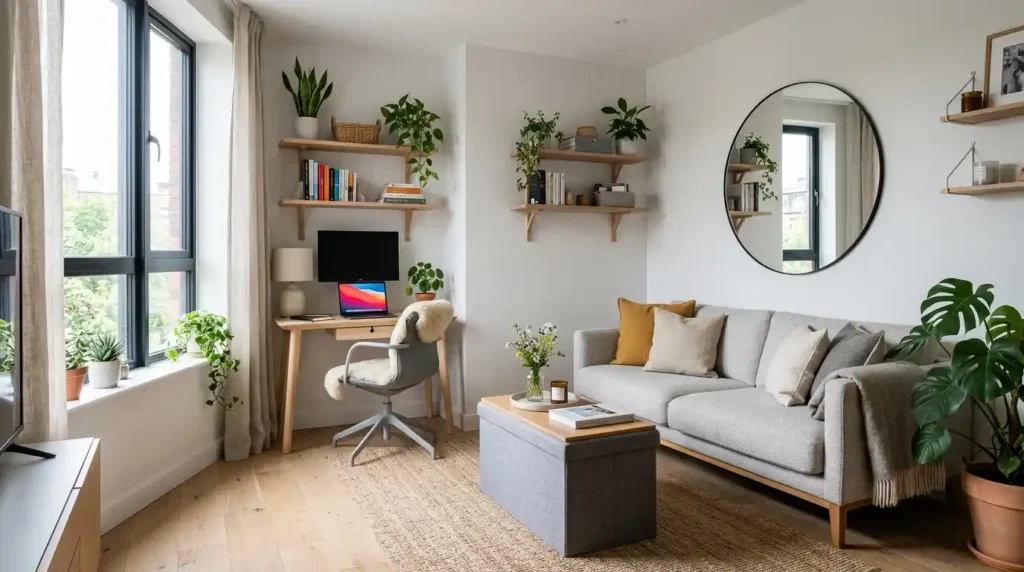
The use of pale or light colored walls increases the available reflection of light in a small room, making it look larger instantly. The use of furniture with exposed legs and not one that covers too much floor space will make the room look spacious visually. Multi-functional furniture such as an ottoman which serves as a storage place as well as a guest seat will increase functionality without any clutter. The use of vertical storage such as high storage shelves makes maximum use of wall space that otherwise would have been wasted. Mirrors will help reflect the light to create an open environment.
Designing a Home Office Without a Spare Room
The practice of remote working has necessitated a proper workstation despite the absence of additional space within one’s home. An office can be created by using just a little bit of space in a quiet corner with a proper desk and a comfortable chair. The presence of a desk lamp is also important in reducing strain on one’s eyes from spending a lot of time reading or working in front of the computer. A room divider or curtains can be used to partition the office section from the rest of the room.
Choosing Colors, Textures, and Personal Touches
Color and texture decisions shape a room’s entire mood, often more than any single furniture piece. Getting this right ties a space together cohesively.
A Simple Approach to Color and Texture
Neutral colors such as off-white, gray, or pastels create a relaxing environment in a house. Adding various textures, such as a basket by a ceramic vase, can add appeal without making the room appear cluttered. The inclusion of natural elements, including branches, stones, or pieces of wood, introduces textures at a low cost. An accent color can be added sparingly through accessories such as pillows and paintings to give life to a neutral room. It is advisable to try out colors in a real room to see how they look.
Making a House Feel Like Your Story, Not a Showroom
Little personal things such as family photographs, mementos from travels or even handcrafted objects create a difference between an authentic house and a house on a catalog page. The former is expensive while the latter costs nothing and yet creates a feeling of uniqueness of the place because of its particularity.
Shopping Smart Instead of All at Once
How you shop matters just as much as what you buy. A patient, strategic approach beats an impulsive shopping spree nearly every time.
Buying Slowly and Mixing Old With New
Don’t try to completely furnish a whole room in one visit because that tends not to be something that stands the test of time. Combining the new pieces with some things that you already have and love will give a more collected appearance in the long run. That also tends to make your budget last much longer since you aren’t furnishing the whole room at once. Living in the room for a few weeks will actually show you exactly what you’re missing. Making a list of the things you want will help you figure that out.
Affordable Products Worth Prioritizing First
Concentrate on functional objects that will enhance your comfort level, provide storage, lighting, or even personality as opposed to just decoration. Functional enhancements offer you the greatest bang for your buck in terms of how they will benefit you. You can always buy decorative items after everything is done.
Conclusion
The most effective home blog tips that thehometrotters type blogs share usually have something to do with being patient and organized instead of buying things impulsively. Figure out what you want to do, measure everything and take your time shopping. This way, your home is going to become much more personalized and unique.
frequently asked questions(FAQs)
The acquisition of furniture without first measuring the room and understanding its requirements.
Paint it in light colors, use furniture with exposed legs, multifunctional furniture, and cleverly place mirrors around the room.
No, it is better to purchase items gradually and combine them with what you already have.
Hang some pictures of the family, souvenirs from travels or handmade things, and refrain from completely furnishing all the rooms by one matched set.
1 thought on “Blog Home Ideas TheHomeTrotters: 6 Planning Steps Before You Spend a Dollar”